
Bahá’í Communities across the globe joyfully commemorate the Twelfth Day of Ridván—known as the “King of Festivals” and the “Most Great Festival”—on
5 Jamál, 183 B.E. i.e. on 2 May 2026 A.D.
This sacred day marks the conclusion of a twelve-day period honouring Bahá’u’lláh’s declaration of His divine Mission in 1863, a pivotal moment in Bahá’í history and a turning point for humanity’s spiritual evolution.
Ridván, meaning “Paradise,” celebrates the time Bahá’u’lláh spent in the Garden of Ridván on the banks of the Tigris River in Baghdad.
The Twelfth Day of Ridván, in particular, commemorates Bahá’u’lláh’s departure from the garden to begin His exile to Constantinople (modern-day Istanbul). Though the journey marked the beginning of great hardship—including imprisonment, exile, and suffering—it also signaled the spiritual dawn of a new world religion. Bahá’ís honor this day with community gatherings, devotional programs, readings from the sacred Writings, and expressions of joy and gratitude.
The Guardian of the Bahá’í Faith, beloved Shoghi Effendi, referred to this period as the “Day of supreme felicity” and a time when “all created things were immersed in the sea of purification.”
It is the last day Bahá’u’lláh spent in the Garden of Ridván in Baghdad before leaving for Constantinople.
The 1st, 9th, and 12th days are major Bahá’í holy days on which work and school are suspended.
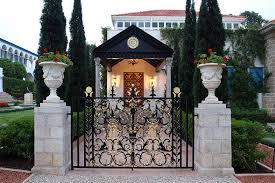
This twelve-day period (April 21 – May 2) celebrates the time in 1863 when Bahá’u’lláh proclaimed His Mission as God’s Messenger for this Age at a garden in Baghdad, that became known as the Garden of Ridván (Paradise).
Since Abdu’l-Bahá’s time, Bahá’í elections have normally been held during Ridván.
The entire 12-day Ridván period is crucial for Bahá’í Communities, as it is when they annually elect their local and national governing bodies (Spiritual Assemblies).
The Ridván Garden in Baghdad was originally named Najibiyyih. Bahá’u’lláh renamed it Ridván, which means Paradise.
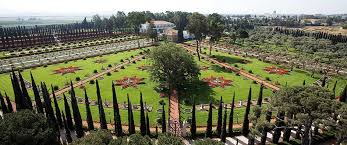
Bahá’u’lláh had been exiled to Baghdad from Tehran in Persia in 1853, but in 1863 the authorities began to fear that He might be a focus for political unrest there. It was decided that Bahá’u’lláh would now be exiled to Istanbul.
So that His family and followers could prepare for the journey, Bahá’u’lláh left His house on 21 April 1863 and moved to the Najibiyyih Garden, where He proclaimed the Festival of Ridván. The festival begins 2 hours before sunset on 21 April, as that was the time He arrived in the Garden.
The Festival of Ridván, called the “King of Festivals,” is celebrated worldwide.
On this Twelfth Day in1863, Bahá’u’lláh and His family departed the Garden of Ridván to start their journey into exile. The day is known for being a blend of joyous celebration of the new revelation and profound sorrow due to His departure.
Bahá’u’lláh mounted His horse (a roan stallion) at noon to leave, with many followers showing intense affection and sadness, bowing to the ground as He left.
Bahá’u’lláh advised His followers to be steadfast in their service to God and reassured them of His ongoing spiritual presence despite the physical separation.
The party began a four-month, arduous journey to Constantinople, which was intended by authorities to end the influence of the fledgling faith but instead heralded its expansion.
While the first day was the start of His declaration (claiming to be the Promised One of all religions), the 12th day signifies the culmination of His stay and the beginning of a new phase of His Mission, moving away from His “Most Great House” in Baghdad.
It is regarded as a day of immense spiritual significance, with Bahá’u’lláh referring to it in some tablets as a time “whereon the breezes of forgiveness were wafted over the entire creation”.
Though a day of banishment, it is celebrated by Bahá’ís as a moment of victory, as the exile failed to stop the growth of the Bahá’í Faith.
Bahá’u’lláh claimed that His Mission as the Promised One of the Báb, was revealed to Him in 1852 while imprisoned in the prison known as the Black Pit of Qajar Iran. After His release from the Black Pit, Bahá’u’lláh was banished from Qajar territory and He settled in Baghdad, which became the centre of Bábí activity. Although He did not openly declare this Prophetic mandate, He increasingly became the leader of the Bábí community.
Bahá’u’lláh’s rising prominence in the city, and the revival of the Persian Bábí community, gained the attention of His enemies in the ulema and the Qajar government.
They were eventually successful in having the Ottoman government summon Bahá’u’lláh from Baghdad to Istanbul.
Historically, the events of this day are deeply moving. On May 2, 1863, Bahá’u’lláh mounted a red roan stallion at noon, as countless admirers gathered around, imploring Him to stay and blessing His departure. An eyewitness, the historian Nabil, described the emotional scene:
> “Numerous were the heads which, on every side, bowed to the dust at the feet of His horse, and kissed its hoofs, and countless were those who pressed forward to embrace His stirrups.”
– Shoghi Effendi, God Passes By, p. 155
Among those deeply affected was a devoted follower, Mirza Asadu’llah Kashani, who chased after Bahá’u’lláh’s caravan until the Manifestation Himself gently urged him to return:
> “Be not overcome with sorrow… Be steadfast in your service to God, who doeth whatsoever He willeth… Live in such peace as will be permitted to you.”
– From “The Chosen Highway,” pp. 122–123
Despite the painful separation, these exiles became the crucible for the global spread of the Bahá’í Faith.
The Ridván period is thus not only a remembrance of Bahá’u’lláh’s declaration but also a celebration of divine renewal and unity.
The words of Bahá’u’lláh echo as a call to all humanity:
> “Arise, and proclaim unto the entire creation the tidings that He Who is the All-Merciful hath directed His steps towards the Ridván and entered it. Guide, then, the people unto the garden of delight which God hath made the Throne of His Paradise.”
– Gleanings from the Writings of Bahá’u’lláh, p. 30
The Twelfth Day of Ridván invites all people to reflect on the eternal values of faith, courage, and unity—and to rededicate themselves to building a world guided by love, peace, and justice.
According to Baháʼí Faith, work and school should be suspended on all nine of its holy days. These days are observed to celebrate significant events in the lives of the Báb and Baháʼu’lláh. The holy days include Naw-Rúz, the first, ninth, and twelfth days of Ridván, the Declaration of the Báb, the Ascension of Baháʼu’lláh, the Martyrdom of the Báb, and the Birth of the Báb and Baháʼu’lláh.
On the first, ninth and twelfth days of Ridván Festival, work is forbidden.
In a letter written on behalf of the Guardian, dated June 8, 1952, to an individual believer, in Lights of Guidance p. 230, it says:
“As regards various matters you raised in your letters, the reason we commemorate the 1st, 9th and 12th days of Ridvan as Holidays (Holy Days) is because one is the first day, one is the last day, and the third one is the ninth day, which of course is associated with the number 9. All 12 days could not be holidays, therefore these three were chosen.” [This footnote added by J.W., 2013, with input from Greg Billington]
Compiled by:
Jaya Raju Thota
Greater Visakhapatnam Andhra Pradesh
India

Author: Sanjeevni Today
Reporter