Baháʼí Communities commemorate the 207th Anniversary of the Birth of the Báb, who is the Prophet-Herald of the Baháʼí Faith and the 209th Anniversary of the Birth of Baháʼu’lláh, the Prophet-Founder of the Baháʼí Faith on 7, 8 Qudrat, 183 B.E. i.e. on 10, 11 November 2026.
On this radiant and blessed festival, Bahá’í Communities commemorate the birth of the Báb, who ushered in a new dawn for humanity, and Baháʼu’lláh, who brought the sun of a new Revelation.
Twin Holy Birthdays are observed on the first and the second day following the occurrence of the eighth new moon after Naw-Rúz, as determined in advance by astronomical tables using Tehran as the point of reference.This results in the observance of the Twin Birthdays moving, year to year, within the months of Mashíyyat, ʻIlm, and Qudrat of the Baháʼí calendar, or from mid-October to mid-November in the Gregorian calendar.
The Festivals of the Twin Holy Birthdays refers to two successive holy days in the Baháʼí calendar that celebrate the births of two Central Figures of the Baháʼí Faith. The two holy days are the birth of the Báb on the first day of Muharram in the Islamic calendar (20 October 1819) and the birth of Baháʼu’lláh on the second day of Muharram (two years prior, on 12 November 1817).
Prior to 2015 and a decision by the Universal House of Justice, these two holy days had been observed on the first and second days of Muharram in the Islamic lunar calendar in the Middle East, while other countries observed them according to the Gregorian calendar on 20 October (for the birth of the Báb) and 12 November (for the birth of Baháʼu’lláh).
For centuries, the peoples of the world have awaited the Promised Day of God, a Day when peace and harmony would be established on earth. The dawn of this New Day witnessed the appearance of not one but two Manifestations of God, the Báb and Baháʼu’lláh, Whose Revelations released the spiritual forces destined to transform society.
The notion of “twin Manifestations of God” is a concept fundamental to Baháʼí belief, describing the relationship between the Báb and Baháʼu’lláh. Both are considered Manifestations of God in their own right, having each founded separate religions (Bábi Faith and the Baháʼí Faith) and revealed their own holy scriptures.
To Baháʼís, however, the Missions of the Báb and Baháʼu’lláh are inextricably linked: The Báb’s Mission was to prepare the way for the coming of Him whom God shall make manifest, who eventually appeared in the person of Baháʼu’lláh. For this reason, both the Báb and Baháʼu’lláh are revered as central figures of the Baháʼí Faith.
In the Kitáb-i-Aqdas, Baháʼu’lláh wrote that His birthday and that of the Báb “are accounted as one in the sight of God”.
The Twin Holy Birthdays are two of the nine holy days of the year when Baháʼís suspend work and gather to commemorate the two Manifestations of God and the dawn of a New Era.
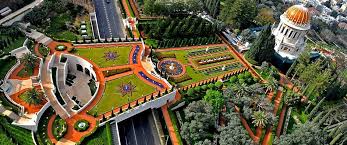
The Báb’s work announced a New Era in human history and the coming of a new spiritual educator, and Baháʼuʼlláh’s message ushered in the Baháʼí Faith, which teaches the oneness of God, the oneness of religion, and the oneness of humanity.
The “twin holy birthdays” of the Báb and Baháʼuʼlláh are two major Baha’i holy days celebrated on consecutive days each year. While historically celebrated on the Gregorian dates of October 20 and November 12, they are now observed according to the Baháʼí calendar, which is calculated as the first and second day after the eighth new moon following Baha’i New Year (Naw-Rúz). This new method reconciles the lunar and solar calendars to unite the observances.
The event emphasizes the close relationship between the two Figures, who are considered “twin Manifestations of God” for this Era.
Early life of Bahá’u’lláh – The Divine Educator:
Born in Tehran, Iran on 12 November, 1817, Bahá’u’lláh enjoyed all the advantages conferred by noble birth. From a very early age, He displayed extraordinary knowledge and wisdom.
As a young man, rather than pursuing a career in government service as His father had done, Bahá’u’lláh chose to devote His energies to the care of the poor. He showed no interest in seeking position or prominence.
Father of the Poor: Before He was called Bahá’u’lláh, before He was known as the Promised One of God, He was called by another title: “Father of the Poor.” Bahá’u’lláh was born into a wealthy family. His father Mirza was a nobleman, who was so respected for his talents, wisdom, generosity, and courage that the Shah gave him the title “Buzurg,” meaning “the great one,” and made him governor.
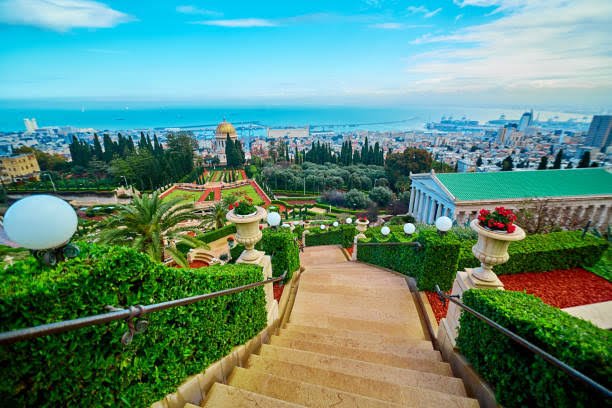
Mirza Buzurg owned a vast estate, and many peasants worked the land and tended his livestock for him. Often young Bahá’u’lláh walked or rode His horse through the countryside, stopping to speak with the peasants and learn about their lives and troubles. Believing that He would one day rule the estate, the peasants watched Him as He grew and were no doubt comforted by the understanding Bahá’u’lláh showed.
When Bahá’u’lláh was nearly eighteen, He married Asiyih Khanum, the daughter of another wealthy nobleman. Asiyih Khanum had everything a young woman in Persia could hope to have. She was tall and beautiful, wise, gentle, and kind. The young couple started their life together with great wealth and comfort. A jeweler worked for six months fashioning her jewels, even creating gold buttons studded with gems for her clothing. Forty mules carried Asiyih Khanum’s belongings to her new home. The couple would, everyone thought, enjoy a grand life of power and luxury, filled with parties and important ceremonies.
But Bahá’u’lláh was not interested in living a life of wealth and ease. He had never forgotten the poor peasants whose lives had touched His heart, and so He was rarely seen among the wealthy and powerful. Instead, He and Asiyih Khanum took care of the poor. They listened to their problems and tried to help them. Often they invited them to share meals with them. No needy person was ever turned away. Because of the kind comfort she offered so willingly, Asiyih Khanum soon earned the title “Mother of Consolation.” And the generous, wise Bahá’u’lláh was known as “Father of the Poor.”
It was no wonder that Bahá’u’lláh and Asiyih Khanum’s children would grow to have the same loving and generous hearts. One day, their Son ‘Abdu’l-Baha set off to see His Father’s sheep, just as His Father had done as a young Man. What a sight it must have been – thousands of them roamed the mountainsides! The shepherds were happy to be visited by their kind, young master, and they prepared a feast for Him.
Finally, it was time for ‘Abdu’l-Baha to go home.
The head shepherd drew ‘Abdu’l-Baha aside. “It is the custom to leave the shepherds a gift,” the shepherd told him.
“But I have nothing to give,” ‘Abdu’l-Baha replied.
“They have just given you a feast,” the shepherd pointed out. “You must give them something.”
‘Abdu’l-Baha thought a moment and then decided. “I will give them all the sheep!”
‘Abdu’l-Baha must have wondered what His Father would say when He learned that His Son had given away thousands of His sheep.
But Bahá’u’lláh only laughed. “We will have to protect ‘Abdu’l-Baha from Himself,” He said. “Some day He will give Himself away!”
Baha’u’llah truly was the “Father of the Poor.”
(Written by Gail Radley, illustrated by Jay Kenyatta-Anderson; ‘Core Curriculum for Spiritual Education’, by the United States National Spiritual Assembly)
Reflecting on the profound relationship between the Báb, the Herald, and Baháʼu’lláh, the Promised One.
The life of the Báb (Herald-Prophet of the Baháʼí Faith):
Although still a Youth, the Báb won the esteem of the mercantile (merchant) community. The merchants were amazed not only by the Youth’s brilliant intellect and aptitude, but also by the depth of His integrity, veracity and piety. The Youth was extremely attentive to His religious duties, and gave away large sums to charity to help the poor and disadvantaged. The merchants, aware that the Báb was of noble lineage, were struck by the Youth’s humility, honesty and compassion.
Years later, after the Báb revealed Himself as a Manifestation of God and bringer of a new religion, there were many who remembered Him with deep affection as a child prodigy, or as a virtuous young merchant and pious Youth, and were elated by His declaration.
Among them was Ḥájí Siyyid Javád, disciple of the scholar Siyyid Kázim, who recounted his impressions of the young merchant while passing through Búshihr. He said, “Every time I met Him, I found Him in such a state of humility and lowliness as words fail me to describe. His downcast eyes, His extreme courtesy, and the serene expression of His face made an indelible impression upon my soul. I often heard those who were closely associated with Him testify to the purity of His character, to the charm of His manners, to His sell-effacement, to His high integrity, and to His extreme devotion to God.”
Likewise, His childhood tutor, Shaykh ‘Abid, years after the Báb proclaimed His mission, spoke reverently about Him as a young pupil in his class. He expressed his amazement by this child’s uncanny ability to understand the most complex verses in the Koran. He said,
“He expounded the meaning…in terms such as I had neither read nor heard. The sweetness of His utterance still lingers in my memory… Day after day He continued to manifest superhuman wisdom as I am powerless to recount.”
Honouring the Twin Manifestations of God, the Báb and Baháʼu’lláh, whose lives and teachings illumined the path to the oneness of humankind.
The Baháʼí Faith. is a global religion whose purpose is to unite all of humanity. It is an inclusive Faith that believes in the unity of God, the unity of religions, and the unity of humanity. Bahá’ís believe that the world’s religions are part of one progressive, divine plan, and that Baháʼu’lláh is the most recent Manifestation of God for this age.
A key theme of the Twin Holy Days is the call for Baháʼís to translate their joyful celebration and worship into acts of service.
The commemoration is not just a remembrance of the past but an inspiration for future action, encouraging individuals and communities to actively work towards creating a more peaceful and unified world.
The festival is universally inviting, open to people of all backgrounds. This inclusivity reflects the central Baháʼí principle of the oneness of humanity, welcoming everyone to join in celebrating the New Era of human unity.
Global, unified celebration:The timing of the Twin Holy Days, decided by the Universal House of Justice in 2014, ensures that Baháʼí communities around the world can celebrate together as one joyous festival.
This unity in celebration itself serves as a powerful symbol of the global oneness central to the Baháʼí Faith.
The Twin Holy Birthdays are two of the nine holy days of the year when Baháʼís suspend work and gather to commemorate these twin Manifestations of God and the dawn of a New Era.
Compiled by:
Jaya Raju Thota,
Greater Visakhapatnam
Andhra Pradesh
India

Author: Sanjeevni Today
Reporter