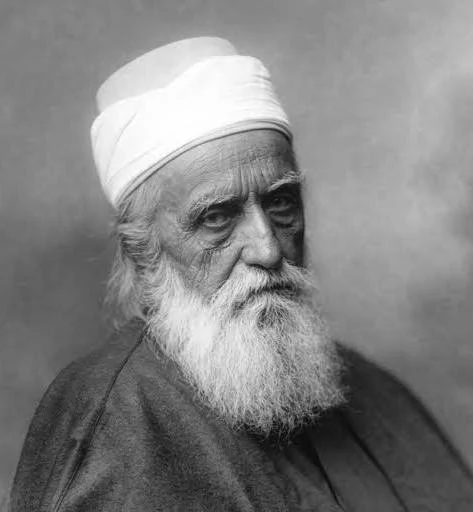
Commemorating the life, teachings, and enduring Covenant of Bahá’u’lláh, and honouring the unique station of ‘Abdu’l-Bahá.
The Day of the Covenant is a Baháʼí holy day observed from sunset on Wednesday, November 25, 2026, through sunset on Thursday, November 26, 2026, during Baháʼí year 183 B.E. It commemorates ʻAbdu’l-Bahá’s appointment as the Centre of Baháʼu’lláh’s Covenant and Baháʼu’lláh’s designated successor, interpreter, and exemplar.
The day highlights unity, institutional continuity, and loyalty to Baháʼu’lláh’s Covenant.
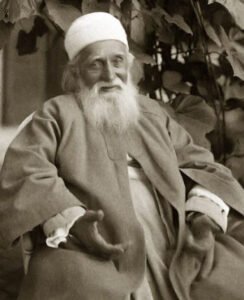
The Day of the Covenant is the day when Baháʼís celebrate the appointment of ʻAbdu’l-Bahá as the Centre of Bahá’u’lláh’s Covenant. It occurs yearly on the 4th day of Speech (Qawl) which coincides with either November 25 or 26 depending on when Naw Ruz falls on that year. As mentioned above, this year, Baháʼís observe the Day of the Covenant on 26th November 2026.
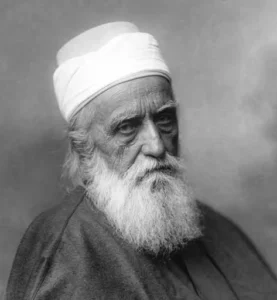
On 26th November 2026, the global Bahá’í Community will commemorate the Day of the Covenant, a special occasion dedicated to celebrating the life, teachings, and enduring influence of ‘Abdu’l-Bahá, the Center of the Bahá’í Covenant. This day serves as a profound reminder of the unity, love, and steadfastness embodied by ‘Abdu’l-Bahá, who played a pivotal role in guiding the Bahá’í Faith and fostering harmony among its followers.
The Historical Background and Spiritual Significance of the Day of the Covenant:
The Day of the Covenant, observed by Bahá’í communities throughout the world on 26 November (4 Qawl in the Bahá’í Calendar in 2026), is a special occasion dedicated to honouring the unique station of ‘Abdu’l-Bahá, the eldest Son of Bahá’u’lláh, as the Centre of His Covenant.
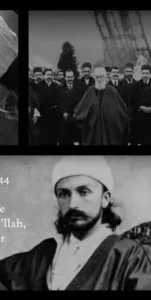
Why is 26 November observed?
The historical reason for choosing this date is particularly meaningful.
The Day of the Covenant is a Bahá’í holy day observed approximately 180 days after the Ascension (passing) of Bahá’u’lláh. It falls on the 4th day of the month of Qawl (Speech) in the Bahá’í calendar, which corresponds to November 25 or November 26 on the Gregorian calendar (specifically November 26 in 2026).
Origin of the 180-Day Interval:
Avoiding a Conflict with the Báb: ‘Abdu’l-Bahá, the eldest son and appointed successor of Bahá’u’lláh, was born on May 23, 1844—the exact same day the Báb declared His Mission. Because of this, ‘Abdu’l-Bahá forbade Bahá’ís from celebrating His birthday, instructing that the date be reserved exclusively for the Declaration of the Báb.
Choosing the Furthest Date: When early believers repeatedly asked for a day to honor Him, ‘Abdu’l-Bahá permitted them to select a date roughly six months (about 180 to 182 days) removed from the somber anniversary of Bahá’u’lláh’s passing on May 29, 1892 (13 ‘Aẓamat).
Exact Calendar Count: In the 19-day Bahá’í (Badí‘) calendar, counting from 13 ‘Aẓamat (Ascension of Bahá’u’lláh) to 4 Qawl (Day of the Covenant) spans exactly 181 days (nine 19-day months plus 10 days, which is commonly rounded to 180 days or six months in historical accounts).
Purpose and Observance:
Commemorating the Covenant: Rather than celebrating His personal birth, ‘Abdu’l-Bahá designated the day to celebrate His appointment as the Centre of Bahá’u’lláh’s Covenant—the binding spiritual agreement meant to preserve the unity of the Bahá’í community after Bahá’u’lláh’s passing.
How It Is Observed: Originally referred to in Persian as Jashn-i-A‘ẓam (“The Greatest Festival”), it is a joyful occasion marked by community gatherings, prayers, music, and readings from Bahá’í sacred texts. Unlike the nine major Bahá’í holy days, work and school are not suspended on the Day of the Covenant.
In the Bahá’í Faith, the Center of the Covenant refers to ‘Abdu’l-Bahá, appointed by Bahá’u’lláh as the authorized interpreter of His teachings and Head of the Faith, who designated New York City as the “City of the Covenant” during His visit on June 19, 1912.
In New York City, the phrase may also refer to the historic Church of the Covenant in Midtown Manhattan.
Bahá’í “City of the Covenant” (1912)
On June 19, 1912, during His historic visit to New York City, ‘Abdu’l-Bahá affirmed His station as the Center of the Covenant appointed in Bahá’u’lláh’s Will and tlaaTestament.
Designation: Following this event, ‘Abdu’l-Bahá named New York City the “City of the Covenant”.
“In the Bahá’í Faith there are two authoritative centers appointed to which the believers must turn, for in reality the Interpreter of the Word is an extension of that center which is the Word itself. The Book is the record of the utterance of Bahá’u’lláh, while the divinely inspired Interpreter is the living Mouth of that Book—it is he and he alone who can authoritatively state what the Book means. Thus one center is the Book with its Interpreter, and the other is the Universal House of Justice guided by God to decide on whatever is not explicitly revealed in the Book. This pattern of centers and their relationships is apparent at every stage in the unfoldment of the Cause. In the Kitáb-i-Aqdas Bahá’u’lláh tells the believers to refer after His passing to the Book, and to “Him Whom God hath purposed, Who hath branched from this Ancient Root.” In the Kitáb-i-‘Ahdí (the Book of Bahá’u’lláh’s Covenant), He makes it clear that this reference is to ‘Abdu’l-Bahá. In the Aqdas Bahá’u’lláh also ordains the institution of the Universal House of Justice, and confers upon it the powers necessary for it to discharge its ordained functions. The Master in His Will and Testament explicitly institutes the Guardianship, which Shoghi Effendi states was clearly anticipated in the verses of the Kitáb-i-Aqdas, reaffirms and elucidates the authority of the Universal House of Justice, and refers the believers once again to the Book: “Unto the Most Holy Book everyone must turn and all that is not expressly recorded therein must be referred to the Universal House of Justice,” and at the very end of the Will He says: “All must seek guidance and turn unto the Center of the Cause and the House of Justice. And he that turneth unto whatsoever else is indeed in grievous error.”
(From a letter of 7 December 1969, in “Messages from the Universal House of Justice: 1968-1973”, pp. 42-43)
Born on 23rd May 1844 in Tehran, Persia, ‘Abdu’l-Bahá was the eldest son of Bahá’u’lláh, the Prophet-Founder of the Bahá’í Faith. He was designated by Bahá’u’lláh as His successor and the Center of His Covenant—a position unique in religious history.
In this role, ‘Abdu’l-Bahá was entrusted with preserving the unity of the Bahá’í community, interpreting His Father’s teachings, and exemplifying the principles of the Faith.
‘Abdu’l-Bahá’s life was marked by steadfast devotion to humanity, despite enduring decades of imprisonment and exile alongside Bahá’u’lláh. After Bahá’u’lláh’s passing in 1892, ‘Abdu’l-Bahá became the unifying force for the burgeoning Bahá’í community, guiding them with wisdom, compassion, and clarity.
The Covenant of Bahá’u’lláh is a unique feature of the Bahá’í Faith, ensuring the unity and continuity of the Faith after Bahá’u’lláh’s passing. Unlike other religious traditions that often faced division following the death of their founders, the Bahá’í Covenant provided a clear framework to prevent schism.
In His Will and Testament, Bahá’u’lláh appointed ‘Abdu’l-Bahá as the sole interpreter of His writings and the leader of the Bahá’í community. This explicit designation safeguarded the unity of the Faith and established a model of leadership based on love, humility, and service.
The Day of the Covenant is observed annually to honor ‘Abdu’l-Bahá’s vital role in upholding the Bahá’í Covenant.
‘Abdu’l-Bahá traveled extensively, particularly in the West, to spread the teachings of Bahá’u’lláh. His speeches and writings emphasized the unity of humanity, the elimination of prejudice, the equality of men and women, and the establishment of world peace.
In 1921, ‘Abdu’l-Bahá passed away in Haifa, Israel, leaving a profound impact on all who had encountered Him. His Will and Testament further ensured the continuation of the Bahá’í Covenant by establishing the institution of the Guardianship and outlining the principles for the Universal House of Justice, the supreme governing body of the Bahá’í Faith.
“…A Covenant in the religious sense is a binding agreement between God and man, whereby God requires of man certain behaviour in return for which He guarantees certain blessings, or whereby He gives man certain bounties in return for which He takes from those who accept them an undertaking to behave in a certain way. There is, for example, the Greater Covenant which every Manifestation of God makes with His followers, promising that in the fullness of time a new Manifestation will be sent, and taking from them the undertaking to accept Him when this occurs. There is also the Lesser Covenant that a Manifestation of God makes with His followers that they will accept His appointed successor after Him. If they do so, the Faith can remain united and pure. If not, the Faith becomes divided and its force spent. It is a Covenant of this kind that Bahá’u’lláh made with His followers regarding ‘Abdu’l-Bahá and that ‘Abdu’l-Bahá perpetuated through the Administrative Order…”
(23 March 1975, from a letter written by the Universal House of Justice to an individual believer)
A Covenant: “…a binding agreement between God and man…”
Abraham, on Him be peace, made a covenant concerning Moses and gave the glad-tidings of His coming. Moses made a covenant concerning the promised Christ, and announced the good news of His advent to the world. Christ made a covenant concerning the Paraclete and gave the tidings of His coming. The Prophet Muḥammad made a covenant concerning the Báb, and the Báb was the One promised by Muḥammad, for Muḥammad gave the tidings of His coming. The Báb made a Covenant concerning the Blessed Beauty, Bahá’u’lláh, and gave the glad-tidings of His coming for the Blessed Beauty was the One promised by the Báb. Bahá’u’lláh made a covenant concerning a Promised One Who will become manifest after one thousand or thousands of years. That Manifestation is Bahá’u’lláh’s Promised One, and will appear after a thousand or thousands of years. He, moreover, with His Supreme Pen, entered into a great Covenant and Testament with all the Bahá’ís whereby they were all commanded to follow the Centre of the Covenant after His ascension, and depart not, even to a hair’s breadth, from obeying Him.
(‘Abdu’l-Bahá, cf. “Bahá’í World Faith” (Wilmette: Bahá’í Publishing Trust, 1976), p. 358)
Uniqueness of Bahá’u’lláh’s Covenant:
As to the most great characteristic of the revelation of Bahá’u’lláh, a specific teaching not given by any of the Prophets of the past: It is the ordination and appointment of the Center of the Covenant. By this appointment and provision He has safeguarded and protected the religion of God against differences and schisms, making it impossible for anyone to create a new sect or faction of belief.
(“The Promulgation of Universal Peace: Talks Delivered by ‘Abdu’l-Bahá during His Visit to the United States and Canada in 1912”, pp. 455-56)
Written entirely in His own hand … this unique and epoch-making Document, designated by Bahá’u’lláh as His “Most Great Tablet,” and alluded to by Him as the “Crimson Book” in His “Epistle to the Son of the Wolf,” can find no parallel in the Scriptures of any previous Dispensation, not excluding that of the Báb Himself. For nowhere in the books pertaining to any of the world’s religious systems, not even among the writings of the Author of the Bábí Revelation, do we find any single document establishing a Covenant endowed with an authority comparable to the Covenant which Bahá’u’lláh had Himself instituted.
(Shoghi Effendi, “God Passes By” (Wilmette: Bahá’í Publishing Trust, 1974), pp. 237-38)
“….There is, though, a great difference between this and previous Dispensations, for Bahá’u’lláh has written that this is “the Day which shall not be followed by night” (“God Passes By”, p. 245).
He has given us His Covenant which provides for a continuing centre of divine guidance in the world. The Bahá’í Faith has not lacked for ambitious men who would seize the reins of authority and distort the Faith for their own ends, but in every case they have broken themselves and dashed their hopes on the rock of the Covenant.
(14 January 1979, from a letter written on behalf of the Universal House of Justice to an individual believer)
“….Unto the Most Holy Book every one must turn and all that is not expressly recorded therein must be referred to the Universal House of Justice. That which this body, whether unanimously or by a majority doth carry, that is verily the Truth and the Purpose of God Himself.
(“The Will and Testament of ‘Abdu’l-Bahá”, p. 19)
The Covenant is the “axis of the oneness of the world of humanity” because it preserves the unity and integrity of the Faith itself and protects it from being disrupted by individuals who are convinced that only their understanding of the Teachings is the right one—a fate that has overcome all past Revelations. The Covenant is, moreover, embedded in the Writings of Bahá’u’lláh Himself. Thus, as you clearly see, to accept Bahá’u’lláh is to accept His Covenant; to reject His Covenant is to reject Him.
(3 January 1982, from a letter written on behalf of the Universal House of Justice to an individual believer)
The Day of the Covenant is more than a commemoration; it is a call to action for Bahá’ís and all people to embody the teachings of ‘Abdu’l-Bahá in their daily lives.
By drawing inspiration from His life and works, individuals can contribute to building a more just and harmonious world, fulfilling the vision of Bahá’u’lláh for the unity of humankind.
Two other anniversaries which are observed, but on which work is not suspended, are the Day of the Covenant and the anniversary of the Passing of ‘Abdu’l‑Bahá.
Upcoming date: It is followed two days later by the Ascension of ʻAbdu’l-Bahá, which begins at sunset on Friday, November 27, 2026.
Compiled by:
Jaya Raju Thota,
Greater Visakhapatnam, Andhra Pradesh,
India.